Easy Gluten-Free Banana Bread
A soft, moist gluten-free banana bread made with ground almonds and coconut oil, adapted from a Nigella Lawson recipe. It passed the taste test with my gluten-eating family too.
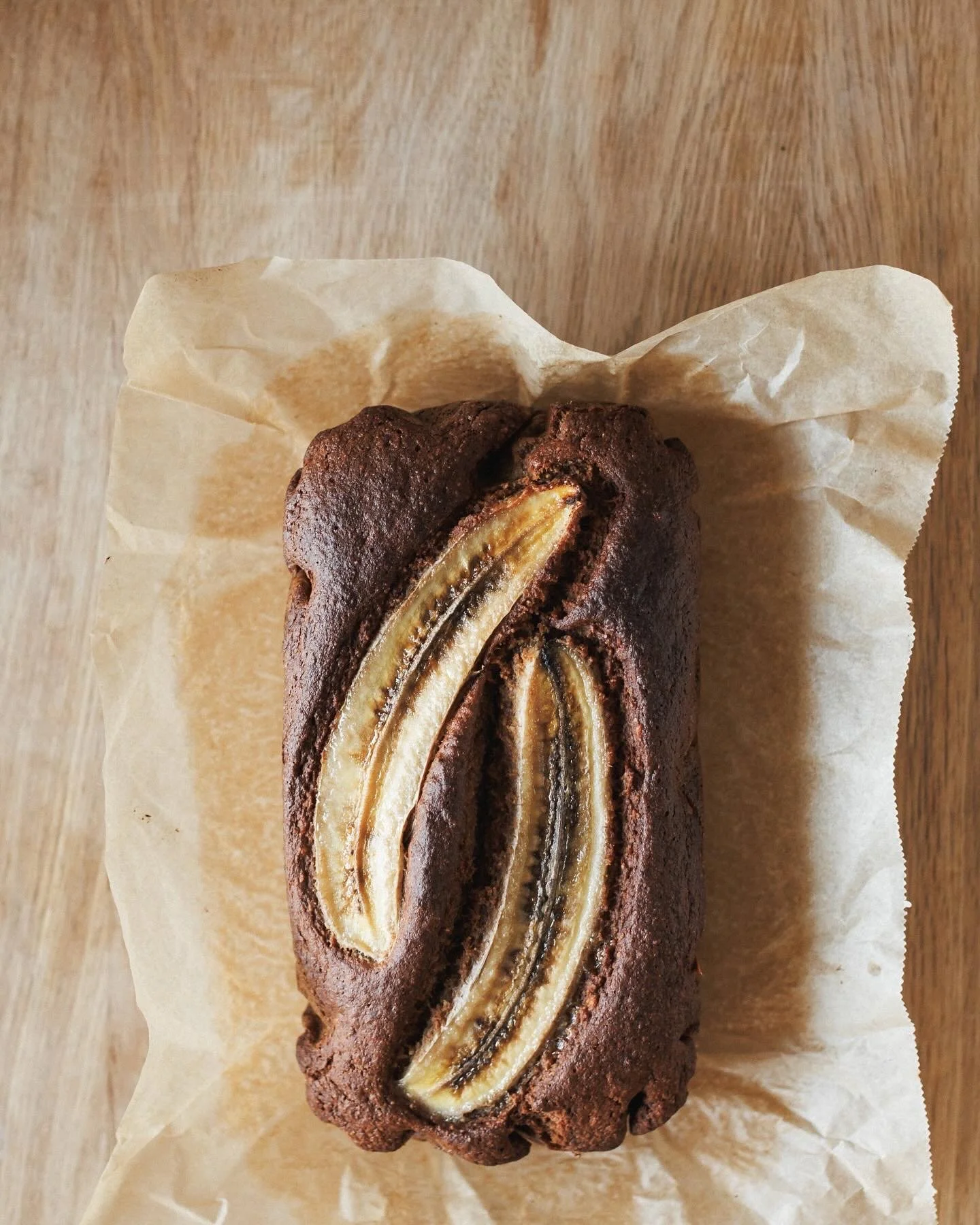
My gluten-free banana bread, fresh from the oven, with a sliced banana baked on top until soft and caramelised.
I can never get the banana stock right in our house…Either there aren’t enough to go round, or there are far too many and they’ve gone brown and spotty in the fruit bowl. I’m starting to wonder whether my family do it on purpose to keep me on my toes, or because they know a banana bread will come out of it! Either way, I’m not complaining. This is the loaf I bake whenever the overripe bananas win, and it’s a good one to have up your sleeve too.
This recipe is adapted from the eternal goddess that is Nigella Lawson.
Recipe: Gluten-Free Banana Bread
Dry ingredients
175g gluten-free plain flour (I use FREEE)
100g ground almonds
2 tsp gluten-free baking powder
½ tsp bicarbonate of soda
¼ tsp sea salt
Wet ingredients
2-3 very ripe or overripe bananas, plus 1 extra to slice on top
2 tsp vanilla extract
100g full-fat Greek yoghurt or crème fraîche (I also use plain soya yoghurt to make it dairy free)
2 large eggs
80g extra virgin coconut oil, melted (or 125ml rapeseed oil)
100g soft brown sugar
Optional extras
100g roughly chopped nuts
75-150g roughly chopped dark chocolate
Chopped nuts are a great addition for extra fibre and protein. Dark chocolate is more of an indulgent treat, as it will increase the sugar and fat content, so I’d add it when you’re in the mood for something special.
Method
Preheat the oven to 170°C (150°C fan / 325°F) and line a 2lb loaf tin.
In a large bowl, mash the peeled bananas.
Add the rest of the wet ingredients - vanilla, yoghurt and eggs, followed by the melted oil, and stir to combine.
Stir in the sugar.
Add the dry ingredients - flour, ground almonds, baking powder, bicarbonate of soda and salt, and mix well until combined.
If using, gently fold in the chopped nuts and/or chocolate.
Spoon the mixture into the lined tin and smooth the top.
Slice the remaining banana in half lengthways and lay it lightly on top, cut side up.
Bake for around 45 minutes. Keep an eye on the top so it doesn’t catch. If it’s browning too quickly, lower the temperature and bake for a little longer.
Check it’s done with the knife test: a knife inserted into the centre should come out clean.
Leave the loaf to cool in the tin before moving it, as it’s delicate while warm.
How I Enjoy It:
Toasted, with a generous slab of good-quality butter. The butter should be almost as thick as the slice!
It rarely lasts more than two days in our house.
Once completely cool, keep the loaf in an airtight container at room temperature for up to 2 days, or in the fridge for up to 5. For longer storage, slice it and freeze it with baking paper between the slices for up to 3 months. You can toast slices straight from frozen, which is perfect for a quick snack.
Why I Love This Bread
Gluten-free, without compromise
The combination of gluten-free flour and ground almonds gives a soft, moist crumb, so it’s a lovely option for anyone avoiding gluten without feeling like they’re missing out.
Extra fibre and protein from ground almonds
Replacing some of the flour with ground almonds adds fibre and protein, which help slow the release of sugars and keep you feeling satisfied for longer.
Sweetened largely by ripe bananas
Very ripe bananas bring natural sweetness and moisture, along with potassium and vitamin B6, which supports energy and nervous system function.
Made with an unrefined fat
Using extra virgin coconut oil means avoiding refined oils, and it gives a lovely richness to the loaf.
Easy to adapt
Swap the yoghurt for soya yoghurt to make it dairy free, or add nuts or chocolate depending on the occasion.
Ready to Nourish Your Health?
I’m Kat, a Registered Nutritional Therapist. Recipes like this are a small glimpse of how food can support energy, digestion, hormones, skin health, and mood. But the biggest changes happen when nutrition is personalised to you.
In my clinic, I support clients with concerns such as digestive discomfort, low mood and anxiety, skin issues, and the changes that come with perimenopause. Many tell me they feel more energised, more comfortable in their bodies, and more confident about their health.
If you’d like to understand what’s going on for you and take practical, realistic steps towards feeling better, I’d love to help.
I have an online clinic and also see clients in-person at Clinic 124 in Whitstable, Kent, UK, for those who prefer face-to-face support. You can book a free discovery call to talk through how I can help, with no commitment!